Serenity Lane offices have been impacted by the ice storm throughout the state. Click here for the most up-to-date information on the status of our services. (last updated 1/18/2024, 5:42 PM)
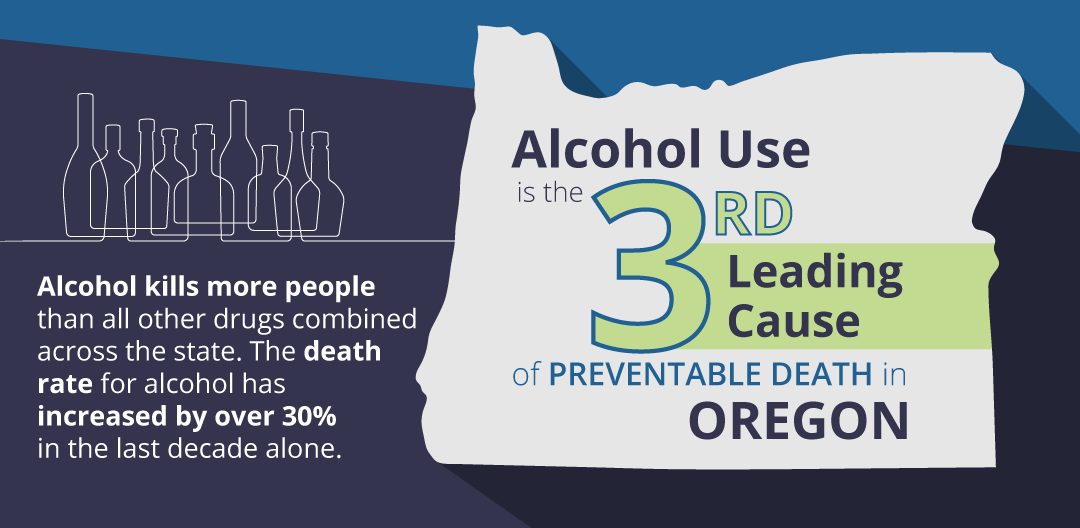
Alcohol use is the 3rd leading cause of preventable death in Oregon. It kills more people than all other drugs combined across the state. This number isn’t on the decline either, in fact, the death rate for alcohol has increased by over 30% in the last decade alone.²⁹
One of the ways we can strive to address this is by looking at the past. As one of the oldest non-profit rehabs in the state, our team at Serenity Lane has seen firsthand some of the impact that alcohol has had over the years. So, what’s worked for previous generations? What hasn’t? Are we worse off than ever before or is it all a case of perspective?
The history of alcohol use, alcohol use disorders, and the treatment of them is one that has changed drastically even just in the last century. From the end of Prohibition to the rise of the legal drinking age from 18 to 21, how has this knowledge been reflected in the attitudes of each generation towards alcohol?
From Prohibition to generation-defining events like COVID-19 and 9/11, let’s take a look at how each generation has chosen to handle their liquor.
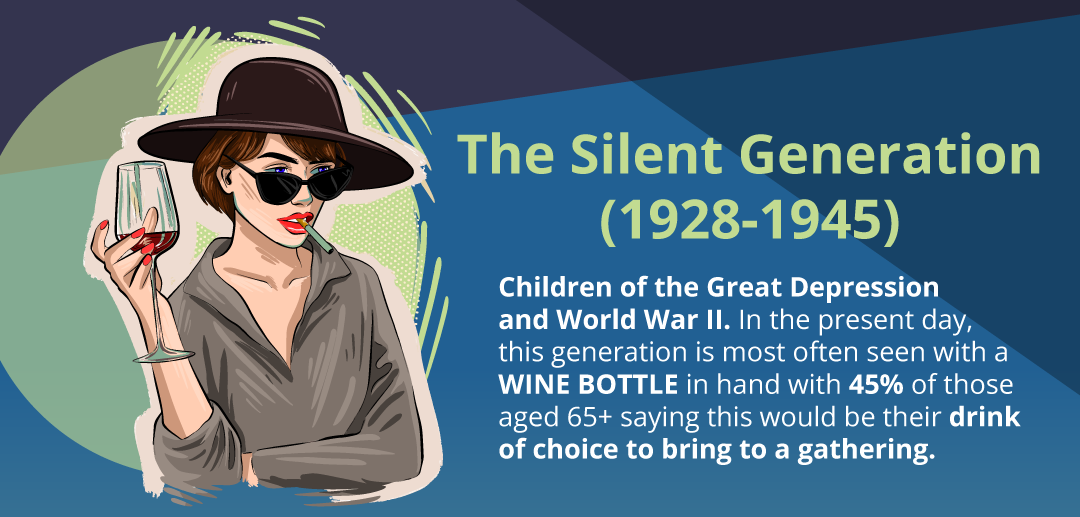
Children of the Great Depression and World War II, this generation was around before the term “alcoholism” was defined as a medical condition. Many members of this generation were born while Prohibition was still in place in the United States. In the present day, this generation is most often seen with a wine bottle in hand with 45% of those aged 65+ saying this would be their drink of choice to bring to a gathering.⁴
While not directly the opinion of the Silent Generation, looking at the viewpoint of their parents can shed some light on how the general opinion toward alcohol shifted drastically as they were growing up. Prior to prohibition, in 1919, over 50% of voters supported it. By 1932, however, nearly 60% of voters wanted to repeal it.⁵
Immediately following prohibition, the national drinking age was set to 21, though the federal law regarding this wasn’t in place yet. While there isn’t a large amount of data for the average age of consumption before 1950, the overall average age noted for first alcohol use before 1950 was 24 ½. This number dropped, however, with 1951 - 1955 having an average first age of 22.¹⁴
In the 1950s, the two top brewing companies in the United States were Jos. Schlitz Brewing Co., followed closely by Anheuser-Busch.² Rum, however, was having a large uptick in popularity due to the 1933 Good Neighbor Policy facilitated between Central and South America, allowing for rum to be even more accessible.
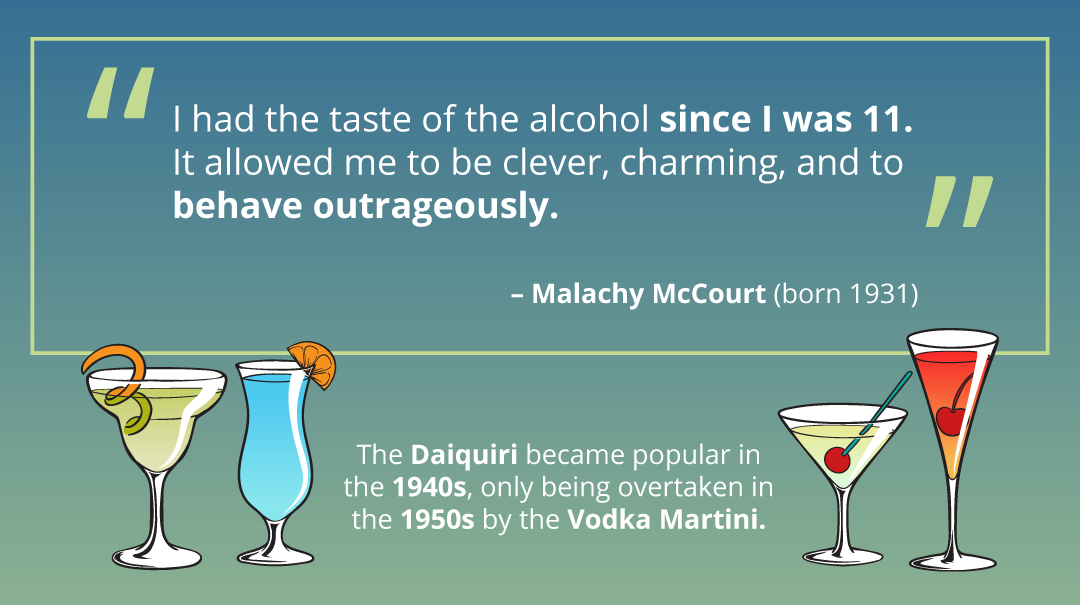
This led to the popularity of the Daiquiri in the 1940s, only being overtaken in the 1950s by the Vodka Martini.³
Studying alcoholic trends and rate of consumption we can surmise that while alcohol was sometimes seen in a negative light it didn’t fully inhibit the drinking habits of this generation as they grew older.
“I had the taste of the alcohol since I was 11. It allowed me to be clever, charming, and to behave outrageously.” – Malachy McCourt (born 1931)

Before the end of prohibition, alcohol ads wouldn’t have been aired for this generation to experience at a young age. Once prohibition was repealed, however, beer and wine companies were quick to start advertising on radio and television alike.
Many of the adverts highlighted the importance or glamor of different alcohols. They most often implied that alcohol would improve your home or social life in one way or another.
Liquor companies, on the other hand, self-imposed an advertising ban as early as 1936 out of fear of prohibition coming back. They didn’t want to receive potential backlash should prohibition be reinstated. This lower public presence led to people believing that liquors were far worse than beer or wine.
As of 2022, 43% of those aged 65+ in the United States reported current alcohol use, with less than 10% reporting binge drinking.⁷ This isn’t truly indicative of their drinking habits when they were younger. While there isn’t explicit data for the age groups and how much they drank for their time period, we do know the average consumption per capita across the country around that time.
Immediately after prohibition, the average consumption was 0.97 gallons per person aged 15 and older, per year. By the 1960s, this had jumped to 2.07 gallons.⁶
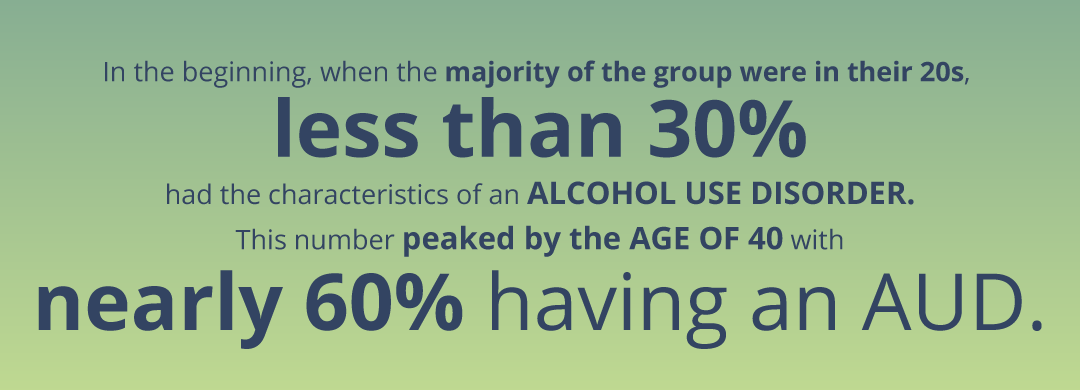
A study conducted over the vast majority of the lifetime of the Silent Generation looked into the prevalence of alcohol use disorders and how that shifted as the group grew older. In the beginning, when the majority of the group was in their 20s, less than 30% had the characteristics of an alcohol use disorder. This number peaked by the age of 40 with nearly 60% having an AUD.
From there, the numbers started to decline from a combination of ceasing alcohol use or from perishing with 30% perishing still having an alcohol use disorder.¹
According to a study conducted in 2020, those in the Silent Generation who were dealing with an alcohol use disorder didn’t usually seek help until they were over 40 years old.⁹ Even though the term “alcoholic” existed long before their generation, it wasn’t medically accepted in the United States as an “illness” until the mid-1950s.
Unless they were facing severe repercussions from their alcohol consumption, many who had an alcohol use disorder didn’t engage in treatment for a long time.
For a majority of the lifetime of the Silent Generation came a large lack of true understanding regarding how alcohol use disorders occur and how they can be addressed. Some perceived alcoholism as a moral failing, while others still believed in the idea of degenerationism.
In addition to this was the general misunderstanding of mental health, disregarding those who were dealing with PTSD from Vietnam and more. Many turned to alcohol until they hit a breaking point, whether that was a loved one threatening to leave them or them dying because of the drink in the first place.

The generation of baby boomers stemmed from the post-World War II era. This name comes from a notable spike in the birth rates during this period. From living through the impact of Vietnam to a spike in substance use, let’s look at how this generation handled alcohol and alcoholism.
Since the 1960s, the average age of first alcohol use started dropping rapidly, only increasing again in recent years as more education has come about. In the 1960s the average age of first alcohol consumption was 23. By 1975 this number had dropped down to 20 and kept decreasing to 17 by 1985.¹⁴
It’s important to note that part of this drop in age came from the changing of laws across the US. Between 1970 and 1975 several states lowered their legal drinking age to anywhere from 18 to 20 years of age.

During the time when most Baby Boomers were of legal drinking age, the most popular breweries were Anheuser-Busche, with Miller Brewing shooting up in popularity from the 70s to the 80s.²
Beyond beer, however, vodka and rum were still holding strong as popular alcohol choices for cocktails. The two most popular cocktails were the Harvey Wallbanger and the Piña Colada.³ As it currently stands, those in the Baby Boomer generation prefer wine and beer above all other forms of spirits at a 59% rate.⁸
On average, drinking was seen as a much more casual thing as the Baby Boomer generation grew older. While often the rambunctious partying and bar hopping were still looked down upon, especially when women were engaging in it, wine and beer became more commonplace in the home.
“24 hours in a day, 24 beers in a case. Coincidence?”
– Steven Wright (born 1955)

While there isn’t much data regarding how advertising impacted Baby Boomers as they were growing up, as early as the late 1960s there was a noticeable shift in how specific types of alcohol advertised themselves.
Wine started to make a shift towards advertising to women in the 1960s following a significant growth in wine consumption across the US. These wines were targeted towards housewives after a tour Jackie Kennedy did in the White House in the early 1960s which showcased wine glasses on the table, appealing to many housewives of the time.¹⁵
Additionally, advertising as a whole started to lean further into highlighting what someone was “missing out on” if they didn’t have a certain alcoholic beverage. They appealed to popularity, attractiveness, and more. Alcohol was generally seen as a very normalized part of younger people’s lives.
The time that Baby Boomers hit their legal drinking age also coincides with the peak of alcohol consumption in the United States in the past century. From 1960 to 1980 alcohol consumption for those aged 14 and older per year went from just over 2 gallons to nearly 3.⁶
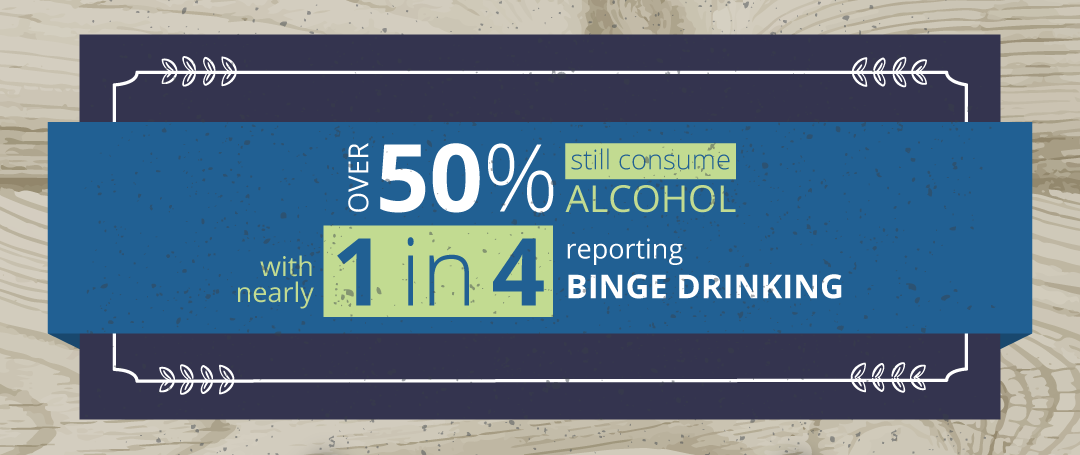
While this number has slowly declined over the years, Baby Boomers currently report that over 50% still currently consume alcohol with nearly 1 in 4 reporting binge drinking.⁷
In the United States, those who are over the age of 65 who die due to alcohol-related causes most often die from the chronic conditions that are caused by excessive alcohol use.¹³
From the 1950s onward, studies show a downward trend in the average age of alcohol dependence. In 1951 the average age was 42 but by 1971 the average age had declined all the way down to 29.¹⁴
On average, those in the Baby Boomer generation who sought help for an alcohol use disorder didn’t do so until they were in their late 20s.⁹ Compared to the generation before them, this is a vast improvement. By the time they were all of age, the acknowledgment of alcoholism as a disease was over 30 years old.
Even though the average starting age of seeking alcohol use disorder treatment lowered drastically, this doesn’t negate the fact that many Baby Boomers still presently have an alcohol use disorder, or died because of an alcohol use disorder.
Those who currently seek treatment are most often men and have the ideology of “I need someone to keep me in line/whip me into shape.” They tend to prefer a more rigid approach if they seek it on their own, though the large majority of older adults tend to be encouraged into treatment because of a partner or loved one.
Dr. Carnevale, an addiction treatment specialist, had this to say. “(Older patients are) more resistant to counseling… (Older patients are more likely to say) ‘I don’t think I have a problem, but she thinks I have a problem.’”
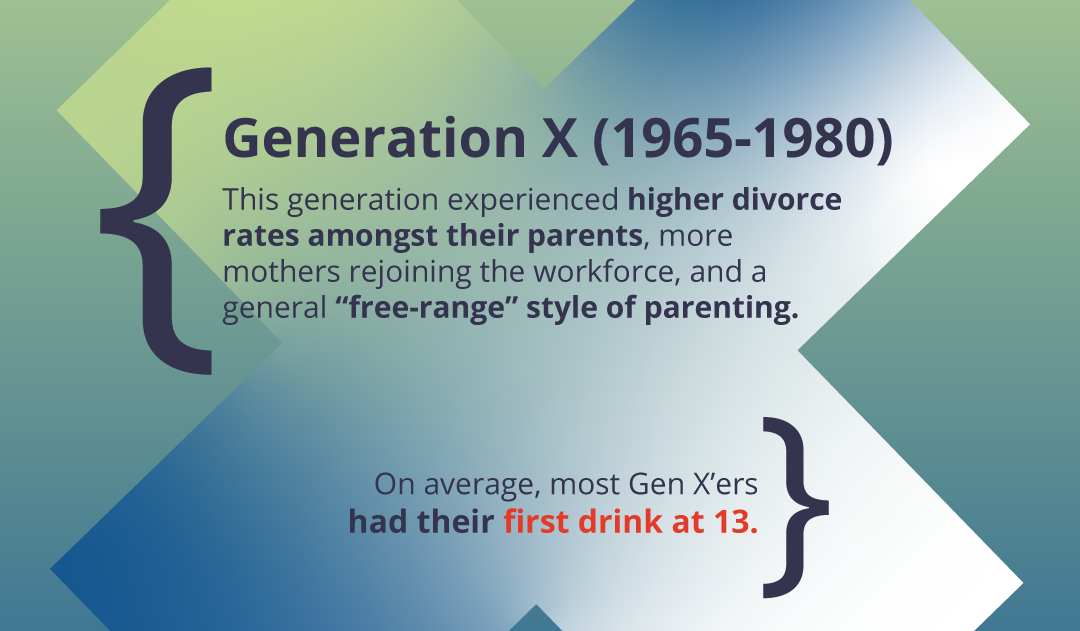
Those born in Generation X are sometimes referred to as the “latchkey generation.” This term originates from children who often returned from school to an empty home, and used a key to let themselves in. This generation experienced higher divorce rates amongst their parents, more mothers rejoining the workforce, and a general “free-range” style of parenting. How did this culmination of homelife influences change their approach towards drinking?
In the 1970s, several states in the United States lowered their drinking age below 21, with 18 being the lowest across the country, reflecting the voting age. Despite this lowered drinking age, on average, the age most Gen X’ers had their first drink was 13.¹² It wasn’t until 1984 that Congress passed the “National Minimum Drinking Age Act” requiring all states to raise the drinking age to 21 by 1986.
Those in Generation X prefer beer above any other form of alcoholic beverage with 64% currently claiming beer as their favorite drink.⁸ But what about back in their “heyday?”
Anheuser-Busch and Miller Brewing Co. both held strong as the 1st and 2nd most popular breweries of the 90s and 00s.² While rum and vodka were still very popular, other forms of liquor like whiskey and tequila were starting to become more present in the most popular cocktails of the time. Long Island Ice Teas and Piña Coladas were two of the favored drinks when this generation was in their 20s.³

Generation X is currently the generation with the highest alcohol consumption. Over the last 2 years, they’ve bought 13% more wine than any other generation. They hold the most purchasing potential than any of the generations after them.¹⁷
“There are two kinds of people I don't trust: people who don't drink and people who collect stickers.” — Chelsea Handler (born 1975)
Amongst this generation, many drink in a casual manner. They’re not afraid to have a beer after work, or wine with dinner. They drink at weddings, family reunions, and sports events. Gen X has truly developed a casual opinion about having alcohol in most circumstances.

While we don’t have specific numbers, by the time Gen X was old enough to listen to the radio and watch TV, alcohol advertising and presence had been around for a few decades. Media has always had an impact on how people think and believe, and its tie to the general consensus on alcohol use is no different. Prior to social media, studies showed the influence that TV shows and commercials had on both minors’ and adults' acceptance of casual and binge drinking.¹⁶
Many ads during Gen X’s younger years started to have more celebrity endorsements and appearances. On top of that, while the trend of glamorizing alcohol in ads continued, ads prompting people to not drink and drive also started to appear during this time.
While the Baby Boomers saw the peak of alcohol consumption across the United States, as Generation X came of age, alcohol consumption per capita was on the decline. In 1985, the average American aged 14 or older drank 2.62 gallons of alcohol a year. By 1995 this number fell to 2.15 gallons.⁶
In the present day, on average 50% of people aged 40-64 report current alcohol consumption in any capacity. Of those aged 40-54, 25% reported binge drinking. Only 6% of people in this age group report heavy alcohol use.⁷
Over 30% of people who die from excessive alcohol use in the United States are between the ages of 50 and 64. Compared to all other age groups, those who are 50 to 64 are twice as likely to die due to the side effects of chronic alcohol use instead of because of the alcohol itself (i.e. in drunk driving crashes, intentional suicides by alcohol, etc).¹³
For Generation X as a whole, the average first age of seeking treatment for alcohol dependence was 21.⁹ While this is a good thing that more people recognized their needs before they were older, this also highlights the prevalence of underage drinking with so many needing help by such an early age.
The 1990s showed a shift in the world of rehab and recovery. Treatment options and strategies to address alcohol use disorders were expanded upon. Project MATCH compared the results between CBT programs, 12-step programs, and motivational enhancement therapy and found them all to be effective in their own right. This led to a change in the rehab environment where people began to have choices for what kind of treatment program they wished to utilize.

Besides Gen Z, the Millennials have undergone some of the most rapid technological expansion of any generation previous. Originally called Generation Y, the name Millennials came about due to the turn of the century that these people grew up through. While Generation X might have caught some of the tail end of the in-school programs started in the 1990s geared towards substance use and alcohol education, this generation got to experience most of this marketing and shift in education firsthand.
Across the span of the Millennial generation, the average age of first drink has shifted from 13.8 to 14.22.¹² This is still a few years under the legal drinking age, but the trend towards this age increasing is a very positive sign.

The younger half of Millennials strongly prefer cocktails at a 71% preference rate, while those in the older half now have a leaning toward beer at 64%.⁸ The most popular brewery is still Anheuser-Busch, but the 2nd seed Miller Brewing merged with the 3rd most popular Molson Coors to now make MillerCoors the 2nd most popular choice. ²
When it comes to cocktails, the Cosmopolitan was the most popular of the 00s with the Aperol Spritz taking over during the 2010s.³
Drug and alcohol education and prevention programs started popping up in schools across the United States in the 1990s and are still occurring today. Millennials are the first generation to fully go through schooling with this new programming and education widely available.
Overall, Millennials drink less than previous generations. Phases have come and gone regarding mentalities such as “You Only Live Once” which encouraged more reckless drinking and lifestyle in general, but most Millennials are well versed in how alcohol can affect you in the long run. This leads to a more conscious and introspective view where people question their own alcohol consumption and actively try to change it.
“No party is complete without cocktails!” – Khloe Kardashian (born 1984)
This isn’t to say that Millennials don’t engage in other activities. In fact, the use of nicotine vaping and marijuana has increased significantly over the past 5 years for young adults in America.²⁶
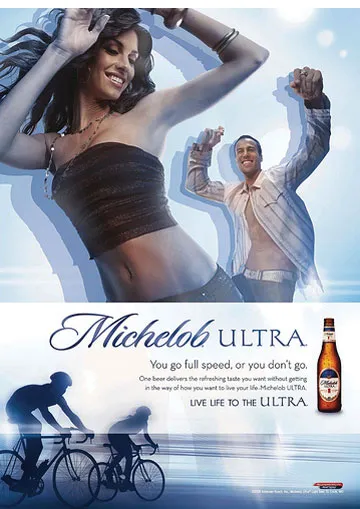
In the early 2000s, a shift was occurring in the media regarding alcohol ads and how often children should be exposed to them. By 2003 there was a general consensus that alcohol companies not advertise on programs where 30% or more of the audience was reasonably expected to be less than 21 years old. However, there was a large push by medical professionals to have it be 15%.
Despite this, from 2001 to 2009 youth exposure to alcohol advertising on TV alone increased by over 70%.¹¹
Those who were of drinking age in the 2000s would’ve seen ads targeting the trend of “YOLO” and similar lifestyles. Additionally, drinks targeted towards young women started to become popular, featuring bright colors and fruity flavors. These themes were often mimicked in alcohol adverts, too.
Millennials are currently all of the legal drinking age. Historically those in their 20s-30s often engage the most with alcohol, and this is true of Millennials too. 2 out of every 3 Millennials you meet likely drink alcohol in some capacity. 1 in 3 claims that they binge drink, and 1 in 10 engage in heavy alcohol use.¹⁰ While these numbers are fairly high, Millennials have consumed much less than previous generations.

Studies have shown that the utilization of teacher-led programs raising awareness of the risks of alcohol consumption has led to a 40% decrease in alcohol consumption by those exposed to it.¹⁸ Additionally, this knowledge has contributed to alcohol screenings in general practice medicine. By screening for certain behaviors and triggers, patients who are flagged as needing potential counseling are able to receive it. This simple counseling and education has been shown to reduce drinking for these patients by 25%.¹⁹
Even with these great improvements, 13.5% of deaths for people aged 20 to 39 are caused because of alcohol. Additionally, nearly 40% of alcohol-related car crashes occur to those between the ages of 20 and 34. ¹³
Overall, for those with an alcohol use disorder in the Millennial group, the average age of first seeking treatment was just over 19.⁹ This is still indicative of a problem regarding underage drinking, but it still shows a positive trend toward recognizing the signs of an alcohol use disorder and not being afraid to seek help.
Even though the age range of young Millennials is still the most common for substance use disorders, they’re not the majority group for those seeking strictly alcohol use disorder treatment. This doesn’t mean that those seeking help for an SUD don’t also have concerns regarding alcohol, however. This overlap of having an SUD and AUD is very common in most cases.
One of the primary differences between Millennials and older generations regarding treatment is how they approach it. While the vast majority of older people in treatment are encouraged there because of a loved one, many younger people seek out treatment on their own or because of a screening from a medical professional.
“Younger patients are more amenable to behavioral health interventions.” Addiction treatment specialist Dr. Carnevale comments, speaking on his time in the field. “They seem to be more accepting of behavioral health-type referrals… Behavioral health is carrying less of a stigma than maybe it did in our parent’s generation.”

Defined by social media and rapid technological expansions, Generation Z, often referred to as Gen Z for short, has an interesting combination when it comes to alcohol trends. While underage drinking as a whole has declined across the nation over the past couple of decades, the general attitude of Gen Z lends itself to binge drinking, living life in the moment, and being less concerned with the consequences.
This isn’t to say that they’re unaware of the consequences and aren’t mindful of them, but rather that the average attitude leans more towards the self-deprecating, hyper-aware of the tragedies that go on around the globe every day.
Not all of Gen Z is currently of drinking age in the United States, so let’s take a look at how that influences the trends and decisions of this age group.

In 2022, nearly 1 in 4 people aged 12 to 17 reported drinking at least once in their lifetime²⁰, but, since the beginning of the 2000s, underage drinking has declined by over 10% in Oregon.²¹
The good news is that we have made a large impact on current generations regarding underage drinking. Not only has the median age of first alcohol use raised, but the average percentage of people under 20 who drink has also decreased.²²
Not all of Gen Z is currently of legal drinking age, so there’s a smaller number of people to observe when it comes to alcohol of choice. The oldest in Gen Z who are of legal drinking age largely prefer cocktails and long drinks over wine and beer with 64% claiming it’s their preferred drink.⁸ This is fairly common with people coming of age as they experiment with drinks or enjoy having something stronger or more picture-worthy on their nights out.
Of all the generations who are old enough to drink, Gen Z drinks the least. They drink even less than Millennials do. This isn’t to say that they don’t like drinking, but rather that they are more conscious than ever of both their mental and physical health.²³
Of course, while untreated mental health conditions can lead to drinking and substance use, the acceptance and understanding of the value of mental health has only improved in the last decade. This leads to more teens and young adults seeking out treatment and other help methods before they turn to alcohol use.
As the use of alcohol has decreased over time, something has to change in the process. Over the past 5 years the use of marijuana amongst 19 to 30-year-olds, as well as the use of nicotine vaping, has significantly increased.²⁶

The current generation is less influenced by TV and radio ads and is more influenced by sponsored posts from their favorite influencers online. The marketing world has taken note of this and hasn’t been afraid to pay celebrities and social media influencers to speak positively about their products.
Many sites like TikTok and YouTube discourage the discussion of substances and alcohol alike, leading to sneakier integrations of these ads if and when they occur. Over half of Gen Z reported that ads from influencers on Instagram and TikTok specifically swayed their decision to try a product.²⁴
Not only do social media adverts and influencers hold sway over minors and young adults alike, but social media also has a strong influence on mental health and trauma. Being exposed constantly to such a large barrage of information has been shown to have an overall negative impact on the mental health of those exposed to it.²⁵ This is especially true for younger individuals who don’t have the same emotional and mental regulation skills that adults may have.
12-15-year-old members of Gen Z in the United States say that about 4% of them drink alcohol, on average. For 16 to 17-year-olds, this number jumps to nearly 15%, increasing to 31% for 18 to 20-year-olds.
18 to 20-year-olds in this group also have a binge drinking rate of 18%, with 5% reporting heavy alcohol use on top of that.¹⁰

Less than 2% of people aged 12 to 17 have an alcohol use disorder. When considering the prevalence of alcoholism amongst Gen Z, since many are still under 18 it’s also key to look at how the exposure they have to alcoholism in their homes. Nearly 1 in 9 children under the age of 17 live with at least one parent who has an alcohol use disorder.¹³
Excessive drinking kills nearly 4,000 Americans under the age of 21 each year. 96.5% of teenagers who die because of alcohol die because of acute causes like suicides or car accidents.
Even though more knowledge about alcohol use disorders and mental health is available, many of Gen Z are still under the hands of their parents. This means that not all kids who need help receive it for a variety of reasons. In the past year, less than 8% of 12 to 17-year-olds who had an AUD received treatment.²⁷
This same statistic holds true for those 18 and older. Less than 10% of people who have an AUD received any sort of treatment. Whether this is due to financial reasons, mental health, stigma, or more there is still much work to be done to make treatment more accessible to all.
As touched on in regards to Millennials, Dr. Carnevale’s words hold true here, too. The younger generation is much more open to interventions and referrals. Gen Z is receptive to help and support regarding their physical and mental health.
In regards to alcohol use, however, this doesn’t always translate to admissions into treatment. This can mean people finding support in online groups or in family and seeking recovery at home. As education about alcohol use and how it impacts the body and mind spreads, more people stop their path of drinking before it gets too dangerous.
It can be easy to get lost in the sea of concern when it comes to discussing alcohol use and how it impacts our country and state as a whole. Looking back on the past century, however, can give us better insight into how far we’ve truly come. The attitudes of each generation and the ones following have changed drastically, many for the better.
The only way our current progress has occurred is through the continued education of the general population, alongside medical studies that have helped us better understand the true impact that alcohol has on an individual. Our continued growth has helped us learn more about “healthy” levels of alcohol consumption, providing us with greater insight into those who need help taking steps away from alcohol use.
For example, in 1992 it was said it was safe for men to drink 21 units of alcohol per week, and for women 14 units. Now, in 2023 the World Health Organization declared that no level of alcohol consumption is truly safe.²⁸
We must continue to reflect on the history of alcohol and alcohol use disorders so we can have better insight into our patients and their viewpoints, while also striving to move forward and provide the best care possible for their recovery.
If you or a loved one has been dealing with alcohol use, there’s help available for you. Our expert team at Serenity Lane offers the full continuum of care, so you’ll have access to the support you need when you need it. If you have any questions, or you’re ready to take that first step, just give us a call at 800-543-9905 and we’ll be ready to help.
Finding serenity in long-term recovery.


Copyright © 2026 SERENITY LANE
SERENITY LANE is a registered trademark of Serenity Lane, an Oregon non-profit corporation.
All Rights Reserved.