Serenity Lane offices have been impacted by the ice storm throughout the state. Click here for the most up-to-date information on the status of our services. (last updated 1/18/2024, 5:42 PM)
WE ADMIT 7 DAYS A WEEK
Same day admissions possible - Most insurance accepted
Whether you’re a firefighter, active or former law enforcement official, correctional officer, EMT/Paramedic, social worker, or military service veteran, Serenity Lane is committed to providing you with the kind of care you deserve.
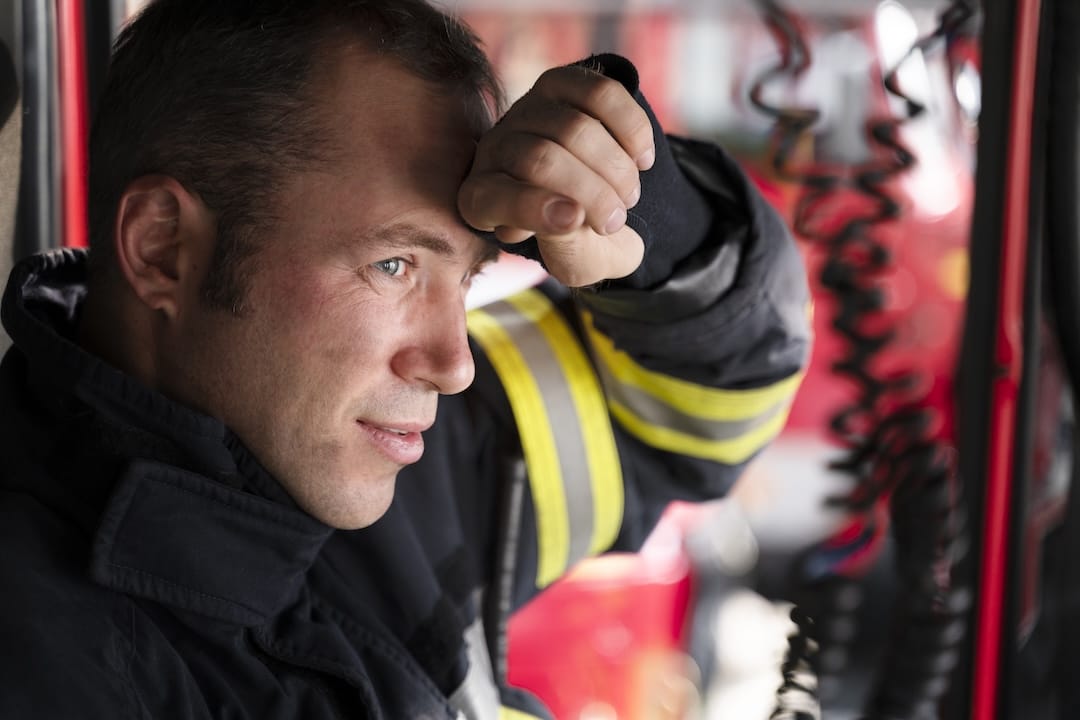
First responders face truly unique and challenging work conditions. They have seen and dealt with things that others can only imagine. This is just as true for the inner-city urban police officer as it is for the small-town EMT. Through mental strength and physical training, first responders can respond to traumatic events in a level-headed way, directly saving lives. They often use this mental strength to internalize trauma.
It has been estimated by the Substance Abuse and Mental Health Services Administration (SAMHSA) that 30% of first responders develop behavioral health conditions, including depression and posttraumatic stress disorder (PTSD). This is compared to a 20% rate of occurrence in the general population. While it is important to note that not all first responders develop PTSD, they are undoubtedly exposed to traumatic events (violence, natural disasters, mass casualties) at a much higher rate than the general public.
Because of this increased rate in the presence of PTSD in first responders, it is very important for you and your loved ones to be able to spot the symptoms of the disorder. Common symptoms of PTSD may include hypersensitivity, social withdrawal, depression, and insomnia.
Along with this, there may often be unique pressures and challenges stemming from first responder work culture. There is an understandable mistrust of mental healthcare professionals. First responders build a close camaraderie, or brotherhood, out of necessity, leading to understandable skepticism toward outsiders.
Mental healthcare professionals are often seen as an outside force that can cause workers to lose pay and even lose their jobs. Because of this stigma, problems with mental health and addiction are often dealt with in-house by organizations that may not have the necessary tools for effective treatment.
The first step toward effective addiction treatment is gaining genuine trust between our staff and our clients.
Did you know first responders have a higher chance of developing PTSD than those in other professions?
It takes a certain type of strong individual to run towards danger while others are running away from it. The mental strength that makes first responders so effective at responding to traumatic events may be the very trait that is holding them back from getting proper treatment. The warrior mentality states that a first responder should never quit and never accept defeat. While this mentality has undoubtedly saved countless lives, it can stand in the way of first responders getting the help they deserve.
At Serenity Lane, our specifically trained mental health and addiction treatment experts understand how to break through this barrier with time and trust.
Honesty and self-disclosure is key to providing effective, lasting mental health treatment. For first responders, sharing their stories and experiences with someone outside their circle can be uncomfortable. Because of their strong sense of camaraderie, first responders may fear that revealing the extent or consequences of their addiction may bring shame to their department, family, or colleagues. They may also fear that revealing this information may even get them fired.
When you remove a first responder from their peers and workplace and place them in the care of trained, compassionate mental healthcare professionals, the fear of judgment begins to fade. There is then the opportunity to talk about the real issues at the core of mental health and addiction.

Being a first responder is not easy, and we are committed to providing you with the kind of care you deserve. Call us today to get started.
For first responders, the treatment of both substance abuse and trauma goes hand in hand as they are co-occurring disorders. To understand why these two issues are so closely related, we must first understand the nature of trauma.
The Substance Abuse and Mental Health Services Administration (SAMHSA) defines trauma as any event or set of circumstances that is experienced by an individual as life-threatening or emotionally/physically harmful that has lasting effects on the individual’s functioning and mental, physical, social, emotional, or spiritual well-being.
Trauma has no boundaries with regard to age, gender, socioeconomic status, race, ethnicity, or sexual orientation. Trauma is a common experience for adults and children in American communities. The need to address trauma is increasingly seen as an important part of effective behavioral health care and an integral part of the healing and recovery process.
The effects of traumatic events can place a heavy burden on individuals, families, and communities. Although many people who experience a traumatic event will go on with their lives without any lasting negative effects, others will have difficulties and experience traumatic stress reactions.
Regardless of the size or nature of their work, first responders will be exposed to trauma at some point in their professional lives. This is true for the small-town EMT, the correctional officer in a minimum-security prison, and the inner-city police officer.
Because of the effects of trauma, it can be difficult to manage the negative emotions and stressors associated with it. The frequency of trauma that a first responder may experience can lead to them seeking unhealthy ways to cope with those negative emotions, often turning to drugs and alcohol.
At Serenity Lane, our mental healthcare professionals are trained in trauma-informed treatment services. We treat the whole person rather than just their symptoms. We understand that drugs and alcohol may be used as a method of coping or survival for first responders. We hope to assist you in finding healthy coping mechanisms to deal with trauma and the stresses of your profession, while also empowering you to feel hopeful toward recovery.
Did you know that detox is often considered necessary care for those with a substance use disorder by insurance companies?
Serenity Lane provides clinical and group therapy components that address the unique needs of first responders with a substance use disorder. This includes addressing trauma, dealing with perceived stigmas around vulnerability and asking for help, establishing fellowship among peers, and clinical interventions to manage stress. Some of the clinical tools we use for healing include motivational interviewing, cognitive-behavioral therapy (CBT), and eye movement desensitization and reprocessing.
If you or a loved one is having trouble coping with the stress and demands of being a first responder, don’t wait to reach out to Serenity Lane for help. Thanks to our partnership with TRICARE, we are pleased to offer more services to military veterans and their families. We continue to explore ways to expand access to treatment for first responders.
Give us a call at 800-543-9905 to get your life back.
Serenity Lane: Finding Serenity in Long-Term Recovery
Don't wait any longer to live the full life you deserve. The team at Serenity Lane can guide you to freedom from addiction.
Serenity Lane offers individualized, effective, and innovative solutions for your clients, neighbors, colleagues, friends, acquaintances, and family members struggling with opioid dependency, and any other addiction. Our residential treatment center in Coburg, Oregon can help you or a loved one today.
Don’t wait another day to get the help you or a loved one needs. Call to speak to a recovery specialist now: 800-543-9905.
Copyright © 2026 SERENITY LANE
SERENITY LANE is a registered trademark of Serenity Lane, an Oregon non-profit corporation.
All Rights Reserved.