Serenity Lane offices have been impacted by the ice storm throughout the state. Click here for the most up-to-date information on the status of our services. (last updated 1/18/2024, 5:42 PM)

What are your thoughts on “cheat days?”
They’re not an uncommon phenomenon. Whether someone’s actually on a diet or not, it’s usually a day where you allow yourself to “splurge.” Do you see this as a weakness? Does it mean their diet is over?
Now, what are your thoughts on alcoholic relapse?
Some people might view them similarly to cheat days – whether they see it as a reward that means nothing or as the end to their recovery. Which is the truth? Can you keep healing if you return to alcohol? What defines a relapse?
With over 68% of all alcohol deaths in Oregon being due to alcohol use disorders, our team here at Serenity Lane wants to help provide education and awareness on this topic. Our goal is to help people recognize when they need help and better understand how these situations happen in the first place.
A relapse, also known as a return to use, is more straightforward than you may think. Even so, a relapse won’t always look exactly the same from person to person, but they will all share a baseline.
If you had a set goal for your recovery and you broke that goal to seek out alcohol, that’s considered to be a relapse.
If you’re feeling guilt about what you did and are trying to rationalize it to yourself, that’s considered to be a relapse.
But, a relapse isn’t the end of your recovery journey. It doesn’t mean you have to continue down that path. Let’s talk further about how they happen and what you can do to either prevent it or recover from it.
There’s no set reason why someone might decide to break their healing journey to seek out alcohol again. However, over the years many common patterns have been spotted.
The main problem when looking at statistics is understanding the source and consistency. One study in 2022 pointed out a major flaw in most relapse studies – the term “relapse” was rarely defined. This means that the results across multiple studies were skewed due to the lack of agreement on what a “relapse” consisted of.
Across hundreds of studies over 78% of the articles had over 100 different definitions of what exactly a “relapse” was.
One study took this into account and measured people who went through recovery for up to a year after they started. They defined “relapse” in two different ways. One measured if they had any form of alcohol consumption, regardless of quantity. Another looked at if the person consumed alcohol for three or more days within the measured time frame.
Here are their results.
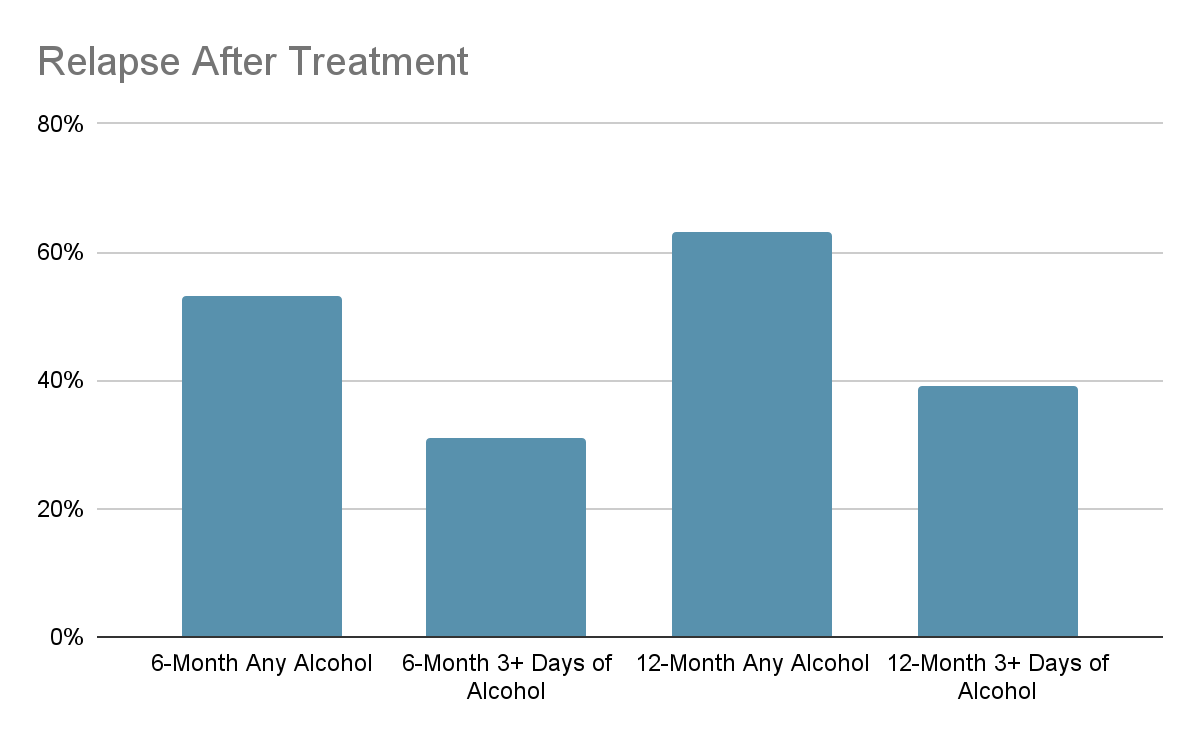
The above study might make the concept of returning to use seem inevitable. Yes, studies can be indicative of patterns, but they do not predetermine your results.
In fact, being aware of the risks and warning signs can help you prevent it in the first place.
Here are some of the most common triggers and warning signs of relapse:
If you’re reading this article, you likely are either someone worried about returning to use, a loved one of someone who did return to use, or someone in recovery who wants to know if it’s “too late for them.”
During your recovery journey, recognizing the possibility of relapse is important for ongoing healing. It shouldn’t be the end of your road, but it also should be something you acknowledge. Don’t brush it off, but also don’t self-flagellate. Be open and honest with yourself and your support about why it happened and how you’re currently feeling about it.
Whatever you do, don’t disconnect from those who’ve been supporting you during your recovery. If you already have, reach back out or seek new support if that’s needed.
No matter where you are in your recovery, now should be the time to consider making a “relapse plan.”
A good relapse plan should consider what to do before and/or after a relapse. It should work to identify potential triggers and put in place a support network. This network should be people who can be open and honest with you about what they see in your behavior should they think you might be at risk of returning to use.
Looping in your therapist and other medical recovery teams is also important. They can offer advice and tools to help solidify your plan and make it fit your needs.
You should be on the same page with those who are a part of your plan. These people should be the ones you trust to make decisions with your best interest in mind. Should a return to use happen, your plan should also include treatment options and other considerations for the next steps.

A good alcoholism treatment program shouldn’t end once you leave an inpatient period. A good treatment program should have ongoing support options, which can help support you during the obstacles that can appear in your healing journey.
Whether you’ve completed a different program and are looking for additional support, or you haven’t previously gone through formal treatment, there’s no reason to wait. You don’t have to walk this road alone. There are people who can make your journey easier and want to see you thrive.
As one of the oldest non-profit rehabs in the state, our expert team at Serenity Lane has seen people of all walks go through our healing program. We’re dedicated to our community and helping people meet their healing goals. With the full continuum of care available, we’ll be here to help you as long as you want support. Why wait? Give us a call today at 800-543-9905 to get started.
Serenity Lane - Finding serenity in long-term recovery.
Copyright © 2026 SERENITY LANE
SERENITY LANE is a registered trademark of Serenity Lane, an Oregon non-profit corporation.
All Rights Reserved.